Freelance vs. Agency: What Gets Lost in the Handoff
The conversation has shifted. A few years ago, the freelance-versus-agency debate centered almost entirely on budget. Agencies cost more, freelancers cost less, and the assumption was that you got what you paid for. But the 2025 comparisons surfacing on Clutch and Contra are telling a different story. Buyers are asking harder questions about who is actually accountable when a project stalls, who owns the relationship when the account manager leaves, and whether a larger team produces better outcomes or just more meetings.
The answer, for many small business owners, keeps coming back to the same friction point: the handoff. At an agency, your project passes through a sales rep who closes the deal, a project manager who schedules the work, a designer who may never speak to you directly, and a developer who gets a brief rather than context. Each transition is a place where your intent gets diluted. The person writing your code often has no idea why you pivoted your business model six months ago or what your best customer looks like. That knowledge lives in a kickoff document that nobody re-reads.
What a Single Practitioner Actually Changes
When one person handles strategy, design, and development, continuity is structural rather than aspirational. There is no brief to misread because the person who heard your goals is the person executing them. This is not a pitch for the romantic notion of the lone craftsman. It is a practical observation about information loss. Every layer you add between client intent and technical execution is a place where something gets dropped.
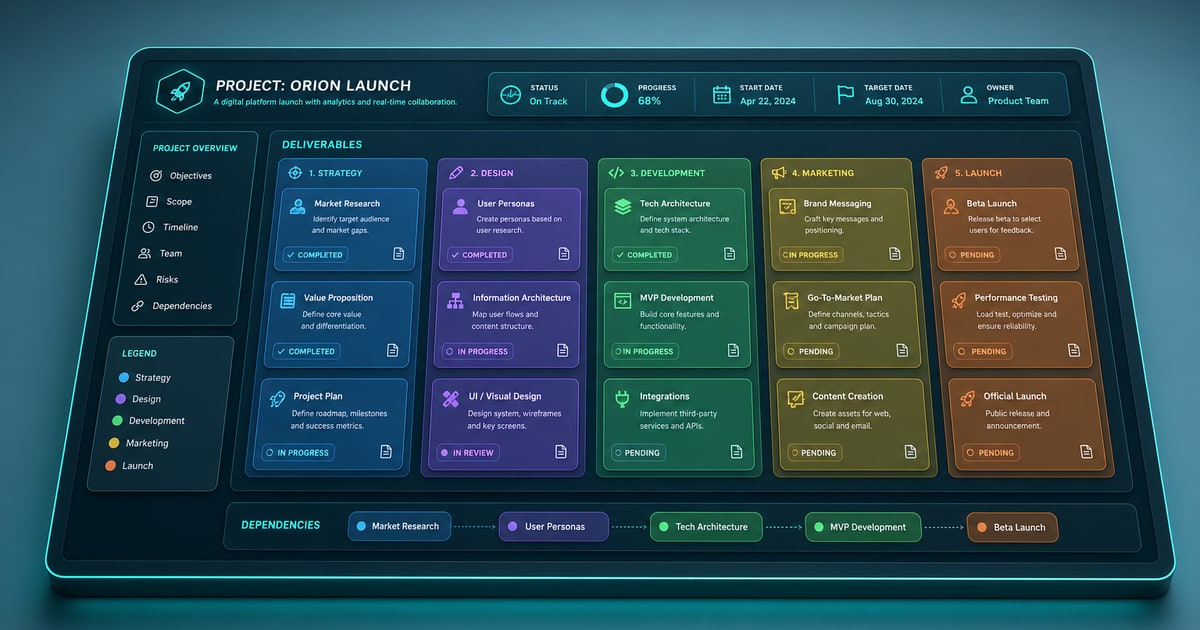
The counterargument from agencies is that a solo practitioner cannot match their process or infrastructure. That was a fair point a decade ago. It is less convincing now. Tools like The Client Space give independent practitioners the same organized project environment that agencies sell as a differentiator: a single place where clients can track deliverables, review assets, and communicate without chasing email threads. The operational gap between a disciplined solo shop and a mid-size agency has narrowed considerably, and what remains is mostly overhead that the client pays for without directly benefiting from it.
Accountability Is the Real Product
Outcomes in web projects depend heavily on who feels the consequence of a bad decision. At an agency, accountability is distributed across roles, which means it often belongs to no one in particular. A freelance practitioner with a direct client relationship has nowhere to hide, and that pressure produces a different quality of attention. You are not one of thirty active accounts being rotated through a sprint cycle. Your site’s performance after launch is a reflection of someone’s professional reputation in a way that a team’s shared portfolio rarely captures.
For small business owners evaluating this choice in 2026, the practical question is not “agency or freelancer” but “who is directly responsible for my results, and can I reach them when something matters.” If the answer involves a ticketing system and a 48-hour response window, that is worth weighing against the perceived safety of a larger team. Craft, accountability, and a working relationship with the person who built your site are not soft benefits. They are the conditions under which good web work actually gets done.
