The WordPress Maintenance Tax Small Businesses Don't See Coming
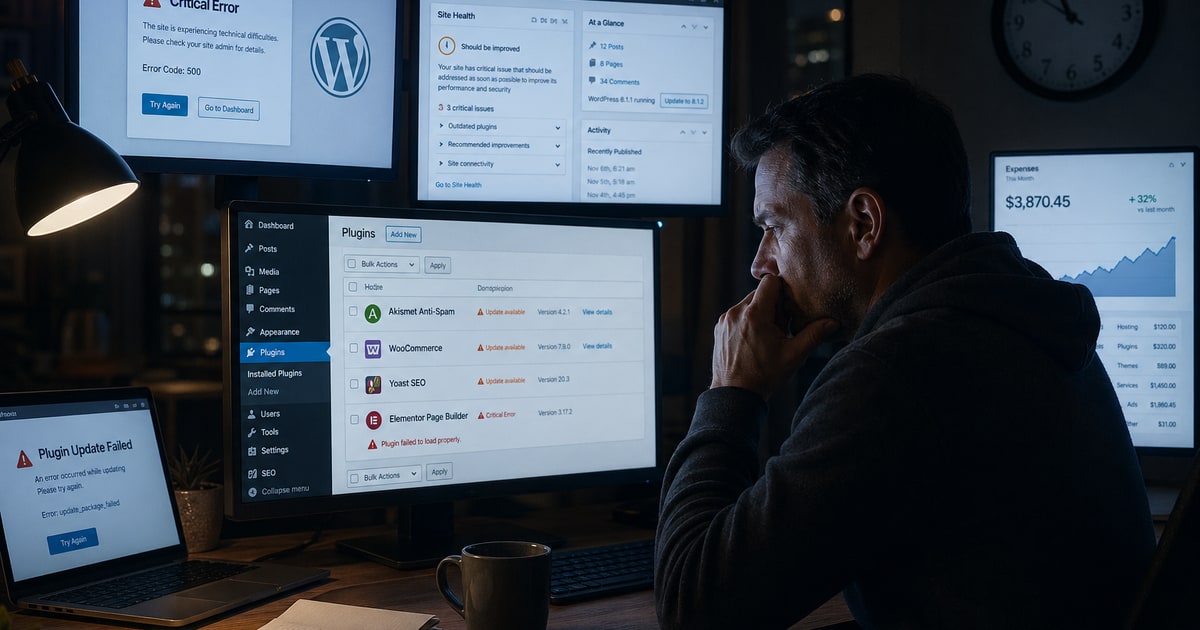
When a small business owner picks WordPress for their website, the pitch is usually about flexibility and familiarity. Thousands of plugins, a visual editor, themes for every industry. What doesn’t come up in that conversation is what happens eighteen months later when a plugin update breaks the contact form, or a hosting provider announces a price increase, or a security scanner flags a vulnerability in an unmaintained theme. That’s the maintenance tax: not a single invoice, but a steady accumulation of time, money, and low-grade anxiety that compounds over the life of the site.
The pattern shows up constantly in small business owner forums. Someone paid a developer to build their site two years ago, everything looked fine, and then a PHP version upgrade pushed by the host made three plugins stop working. The developer is unavailable or charges a minimum retainer to look at anything. The site owner ends up paying someone else to diagnose it, or spending a weekend on it themselves. The original build cost was $2,500. The accumulated maintenance cost over three years, counting hosting, backups, plugin licenses, and one emergency fix, has cleared $4,000. That’s not unusual. It’s the norm for any WordPress site that isn’t actively tended.
Where the Overhead Actually Comes From
WordPress’s architecture requires a database, a PHP runtime, and a stack of plugins that each carry their own update schedules and compatibility surface. Every moving part is a potential failure point, and they don’t move in sync with each other. The core software updates. Then WooCommerce updates. Then the theme updates. Then the caching plugin that was keeping everything fast starts conflicting with the new version of the form builder. None of this is WordPress’s fault exactly. It’s the cost of running a dynamic content management system that was designed when the alternatives were far less capable.
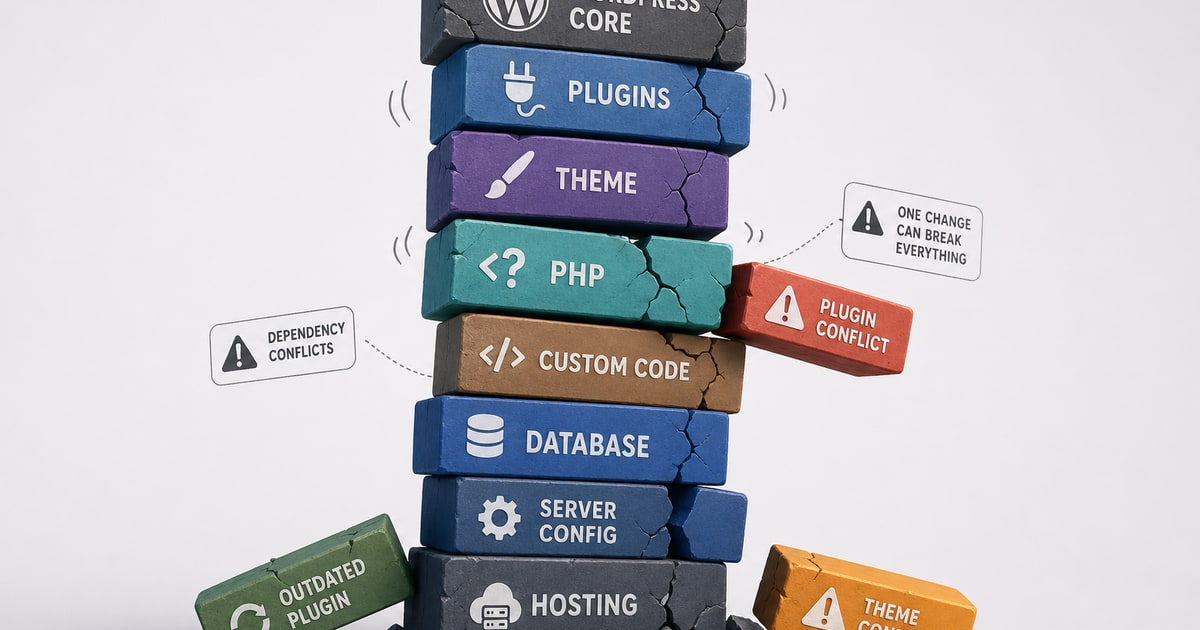
Security is its own category. WordPress powers a large share of the web, which makes it a high-value target. Unmaintained plugins are the most common entry point for compromises, and the fixes often require developer time, not just a click to update. Managed WordPress hosting addresses some of this, but it starts at $30 to $50 per month for a single site and climbs from there. Add a premium theme, a handful of paid plugins, and an annual backup service, and the monthly cost for a site that looked free to maintain is well over $100 before anyone has touched the code.
The Case for Removing the Moving Parts
A static site built in something like Astro doesn’t have a database to patch, a PHP version to keep current, or a plugin ecosystem to reconcile. The site is compiled at build time and served as flat files. There’s nothing to exploit at the server layer because there’s no server-side runtime handling requests. Hosting on a CDN like Cloudflare Pages costs nothing for most small business traffic volumes. When the site needs an update, it’s a content or code change that gets deployed, not a dependency audit.
This isn’t a claim that static sites are appropriate for every situation. A site with complex user accounts, real-time inventory, or editorial teams publishing dozens of posts a week has needs that static generation doesn’t address cleanly. But for the majority of small business websites, those requirements don’t exist. What exists is a brochure site, a portfolio, a service page, and a contact form.
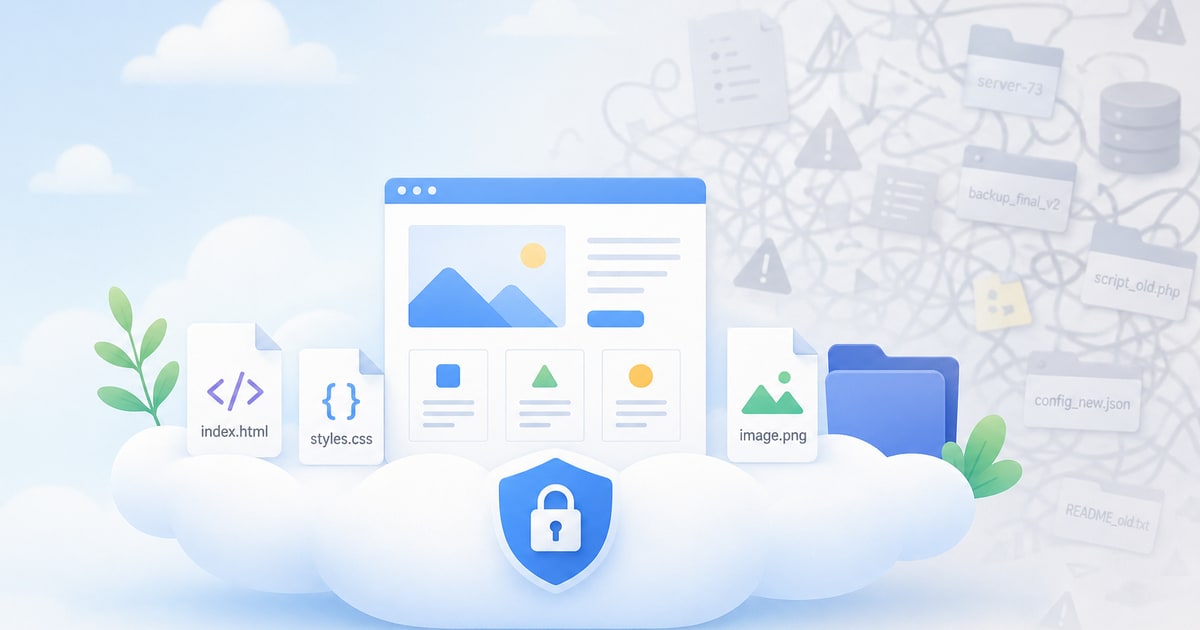
At Concepcion Design, we’ve built on WordPress for the better part of a decade. For a long time, it was the most practical choice for small business clients, and in many cases it still works. But the tradeoffs have become harder to ignore. The maintenance overhead, the fragility across updates, and the long-term cost curve have pushed us to rethink that default.
Today, most new projects are moving toward frameworks like Next.js, Astro, or fully custom builds where we control the surface area and eliminate unnecessary dependencies. In some cases, we’re also helping clients rebuild existing WordPress sites into simpler, more durable architectures.
One of the biggest hurdles with static sites has always been content editing. Developers build them fast and cheap, but clients still need to call back in for every text change or photo swap. That’s where Mergeline comes in. We’re designing it to give clients intuitive, frictionless editing access to their static sites without compromising security or performance. Update your brochure copy, swap service images, or refresh testimonials through a clean interface that triggers automatic rebuilds and deploys. No logins to WordPress. No plugin conflicts. No maintenance tax.
The goal is not to chase trends. It’s to reduce long-term risk, lower maintenance costs, and give clients something that stays stable after launch while still letting them own their content updates.
The build approach is a long-term cost decision. It’s worth treating it that way from the start.
